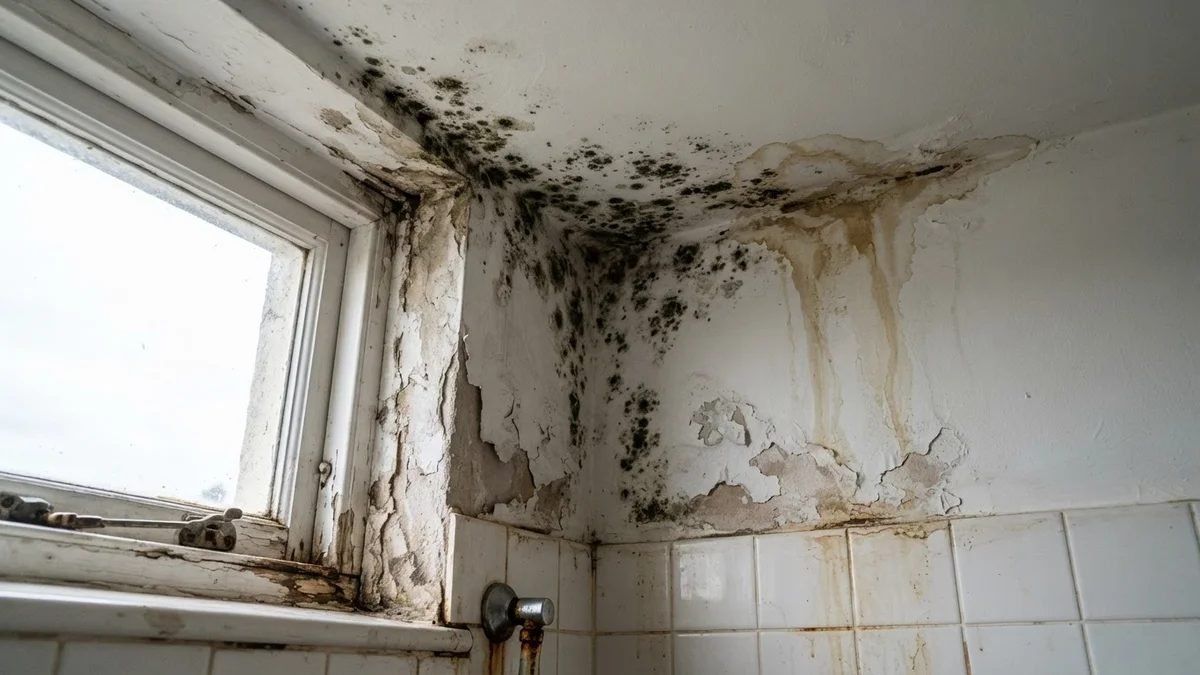
Worried about mold after a leak? Call TideFrame Restoration for a free inspection at (208) 918-9967. We serve Washington DC, Maryland and Northern Virginia.
A leak can look cleaned up within a day, but water often hides inside walls, under flooring and in ceilings. In our humid DC-area summers, that hidden moisture is exactly what mold needs. Here is how to tell if a past leak may have turned into a mold problem.
Signs of mold after a leak
- A musty, earthy smell that does not go away, especially in basements, bathrooms or closets.
- Stains or discoloration on walls, ceilings or baseboards near where the leak was.
- Spots of black, green, white or gray growth, often fuzzy or slimy.
- Peeling paint, bubbling wallpaper or warped drywall, which mean moisture is still trapped.
- Soft or swollen flooring or baseboards pulling away from the wall.
How fast can mold grow?
Mold can start growing on wet materials in 24 to 48 hours. That is why drying the structure completely, not just the surface, matters so much after any leak.
Where to check
- Under sinks and around dishwashers, washing machines and water heaters
- Bathroom walls and ceilings below upstairs showers
- Basement walls and corners, especially after heavy rain
- Ceilings under roof leaks or HVAC drain lines
- Behind furniture placed against exterior walls
What not to do
- Do not scrub or disturb large areas of mold yourself. It can spread spores through your home.
- Do not just paint over stains. The moisture and mold underneath are still there.
- Do not run your HVAC fan if mold is near vents or ductwork.
What professional mold remediation involves
- Inspection: we find the mold and the moisture source behind it.
- Containment: we seal off the work area so spores do not spread.
- Air filtration: filtration runs during the work to capture airborne spores.
- Removal and cleaning: affected materials are removed or cleaned, then the area is cleaned again.
- Fixing the cause: we dry the area and can handle repairs so the mold does not return.
Frequently asked questions
Is the inspection free?
Yes. Inspections and estimates are free.
Does insurance cover mold?
It depends on your policy and on what caused the mold. Mold from a sudden covered event is more likely to be covered than mold from a long-term leak. We work with all insurance companies and also take self-pay jobs.
Think you have mold? Call TideFrame Restoration at (208) 918-9967 for a free inspection.